
EMDR Treatment in Stratford and Ontario
Have you done traditional talk therapy but still feel stuck? Do you continue to experience disturbing symptoms of anxiety, low mood, insomnia, sleep disruption, flash backs, avoidance, negative self talk, or self blame? Does the past become present quickly when you feel triggered by something today? Working with a trained EMDR therapist can provide relief from your symptoms.
Good Therapy offers EMDR trained therapists who integrate Eye Movement Desensitization and Reprocessing (EMDR) into your individual therapy sessions in order to relieve symptoms of trauma, post traumatic stress disorder (PTSD), and grief.
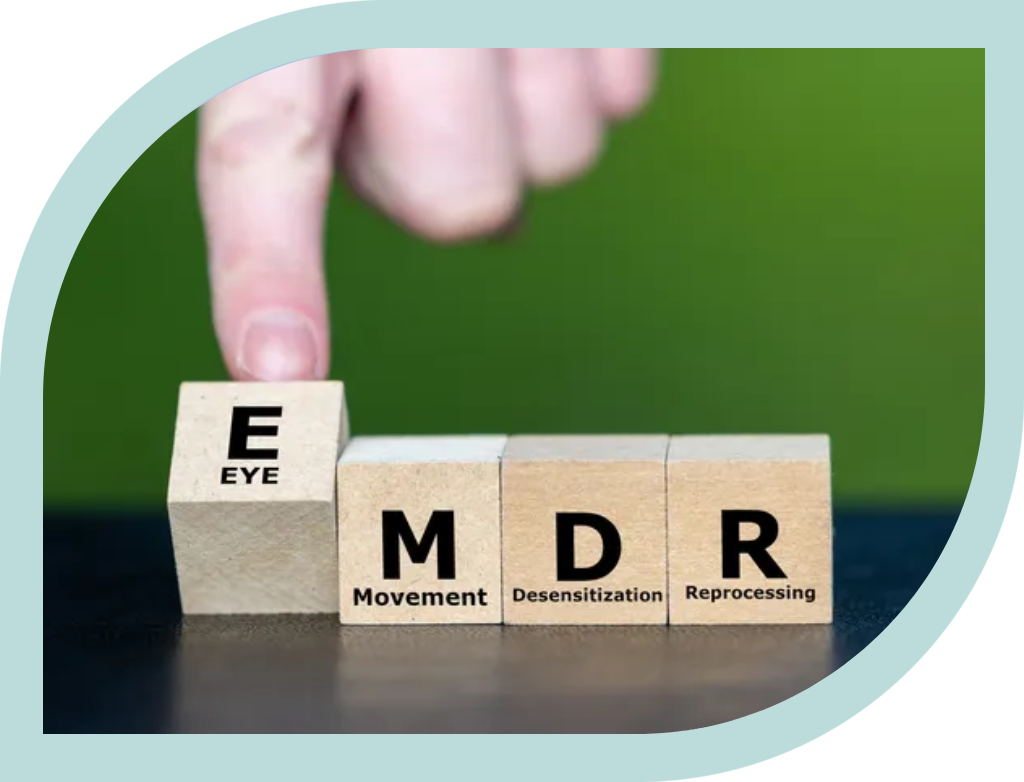
Why is EMDR effective in relieving symptoms?
Did you know bilateral stimulation naturally helps the body process the overwhelm caused by adverse experiences?
Bilateral Stimulation (BLS) in EMDR activates both hemispheres of the brain, helping to process distressing memories and emotions. This rhythmic, alternating stimulation facilitates the brain's natural healing process, promoting integration of traumatic experiences, reducing their emotional charge, and enhancing adaptive coping mechanisms.
At the heart of EMDR therapy lies a neurological concept: using eye movements to help the brain process traumatic events. It’s not about erasing memories but changing how the memories affect us. Imagine flipping through channels on the TV; that’s somewhat similar to what happens during an EMDR session. Through alternating eye movements, sounds, hand-held buzzers, or taps, you are guided to shift your attention back and forth between distressing memories and more preferred or positive thoughts.
This bilateral stimulation is based on mimicking the psychological state we enter during rapid eye movement (REM) during sleep – a phase where our brain processes daily experiences. The theory suggests that stimulating these processes while awake helps integrate traumatic memories into normal, less threatening memory networks. This can significantly reduce their lingering power over our emotions.
A studying from HMO Kaiser Permanente highlights EMDR’s effectiveness: 77% of multiple trauma victims no longer showed symptoms of PTSD after undergoing treatment with trained therapists—underscoring EMDR's potential for profound healing impacts within just sessions.
Learn more about how EMDR treatment can help.
Eight Phases of EMDR Treatment
Sometimes we have difficult experiences that change the way we think about ourselves and the world around us . . . all of us can have those experiences. There is a path to healing and EMDR is proven to help.
History taking and treatment planning:
Your therapist will discuss your history, current symptoms, and treatment goals. When you're ready, you discuss any distressing experiences or memories you would like to target during the treatment. You describe the levels of stress related to each memory and this helps your therapist develop a treatment plan that addresses these specific memories.
Preparation
Your therapist will discuss your history, current symptoms, and treatment goals. When you're ready, you discuss any distressing experiences or memories you would like to target during the treatment. You describe the levels of stress related to each memory and this helps your therapist develop a treatment plan that addresses these specific memories.
Assessment:
In this stage, you are asked to recall the specific memory that you want to target. You will also be asked to identify any unpleasant feelings, body sensations, visual images, and beliefs you may about yourself that are associated with the memory. Your therapist will then ask you to think of a positive belief that you would prefer to have about yourself. This is important for a later stage.
Desensitization:
Desensitization focuses on weakening the relationship between a traumatic memory and the negative feelings, sensations, and thoughts it causes you. This is where bilateral stimulation comes in. While you recall the memory, your therapist will guide you through bilateral stimulation sets which include eye movements, auditory tones, blinking lights, or tapping. You will also be asked to identify any thoughts, images, and physical sensations that occur during this process. This is repeated until the traumatic thought no longer causes you distress.
Installation:
In this stage, your therapist will ask you to focus on the positive belief that you identified in the assessment stage. You will be guided through more bilateral stimulation sets to replace the unwanted belief with this positive belief.
Body Scan:
In this stage, your therapist will ask you to focus on the positive belief that you identified in the assessment stage. You will be guided through more bilateral stimulation sets to replace the unwanted belief with this positive belief.
Closure:
This stage marks the end of the EMDR session. Your therapist will discuss your progress and teach you how to maintain it. They might give you homework and teach you relaxation techniques to manage residual distress.
Reevaluation:
Reevaluation happens at the beginning of every session where your therapist reviews your progress. You will be asked about your level of progress related to the targeted memories. If the memory still causes you distress, your therapist will re-address them with EMDR. If not, you can move on to other memories you would like to address.